










 AI/ML
AI/ML  Rozwój oprogramowania




How We Improved the Development and Maintenance of an ERP System in a Legacy Application

Client
Our client is a German software and consulting company that offers one of the most comprehensive ERP solutions for municipal and commercial waste management in the German-speaking region. The system supports the full handling of transport orders, contracts, invoicing, and billing, as well as additional modules such as integrations with POS systems and scanners.
Challenge
With increasing demand for system enhancements, the company is growing rapidly, but with limited internal resources. This led the client to seek qualified support for the following challenges:
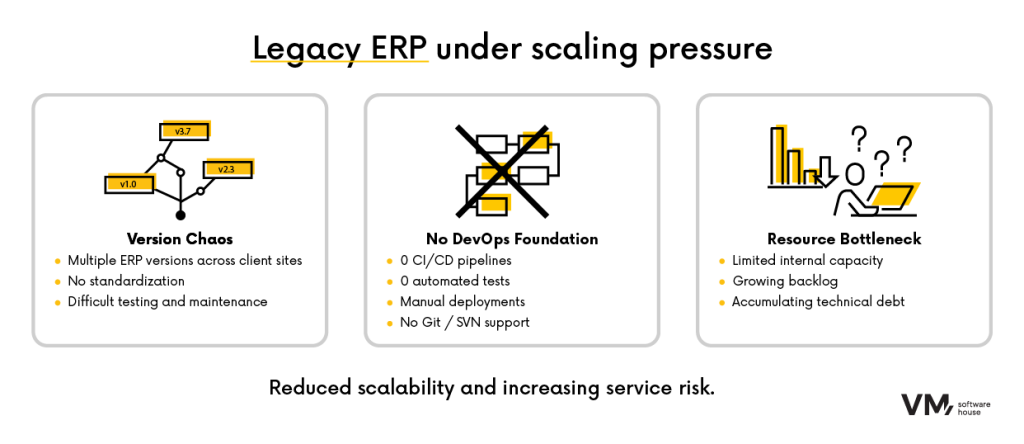
- Diverse system versions across end clients: A lack of standardization significantly complicated testing and maintenance.
- Legacy applications prevented the use of modern version control and automation tools like Git or SVN.
- No CI/CD and no automated testing – deployments were performed manually.
- Weaknesses even in newer components (.NET, Java): inconsistent versioning, lack of documentation, technical debt.
- Limited internal capacity: Additional resources were needed to manage the growing backlog.
These accumulated challenges limited the system’s scalability and increased the risk of declining service quality for end users.
Solution
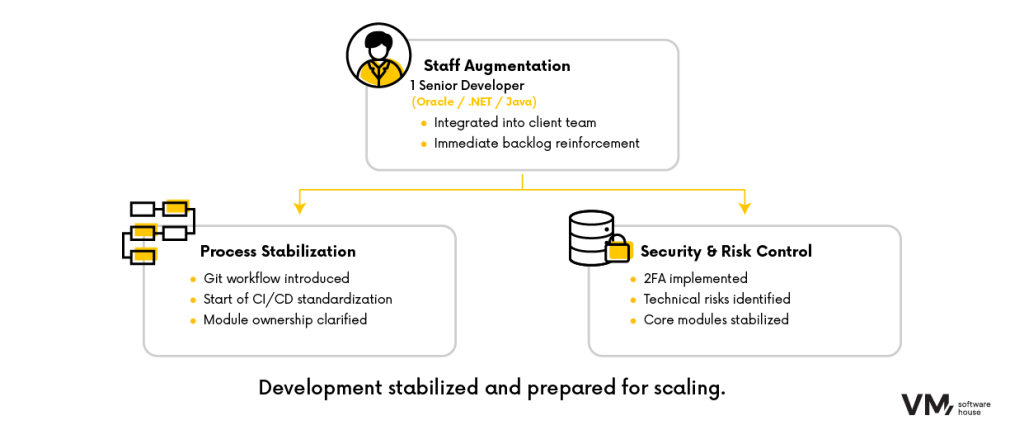
We joined the project via a staff augmentation model, focusing on rapid support for critical areas while simultaneously structuring the technical environment.
- Staff Augmentation Model: We provided a specialized developer (Oracle / .NET / Java) who supported both ongoing tasks and the development of new features.
- Responsibility for .NET modules (e.g., POS systems) and initiation of standardized version control processes.
- Implementation of security measures, such as two-factor authentication (2FA).
- Team capability enhancement: Provided technological support, identified and mitigated technical risks.
Thanks to close integration with the client’s team and a flexible approach to shifting priorities, we were able to quickly resolve urgent issues while laying the foundation for future improvements.
Results
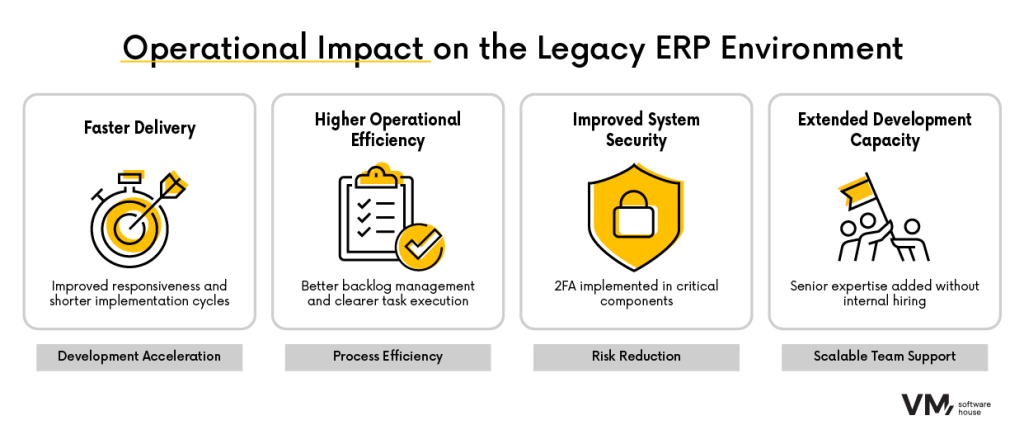
- Reduced lead times: Faster responsiveness to both internal and external requests.
- Improved operational efficiency: Better backlog management through increased capacity.
- Team expansion without hiring: Delivered required expertise without growing headcount.
- Enhanced system security: Successful implementation of 2FA in critical components.
Technologies
- Oracle Fusion Middleware,
- .NET,
- Java.

AI w analizie i kosztorysowaniu przetargów budowlanych – jak firma z Wielkiej Brytanii skróciła analizę z 2 dni do 5 minut
Design, Development, DevOps czy Cloud – jakiego zespołu potrzebujesz, aby przyspieszyć pracę nad swoimi projektami? Porozmawiaj o swoich potrzebach z naszymi specjalistami.
Jakub Orczyk
Członek zarządu / Dyrektor sprzedaży
Zamów bezpłatną konsultację